
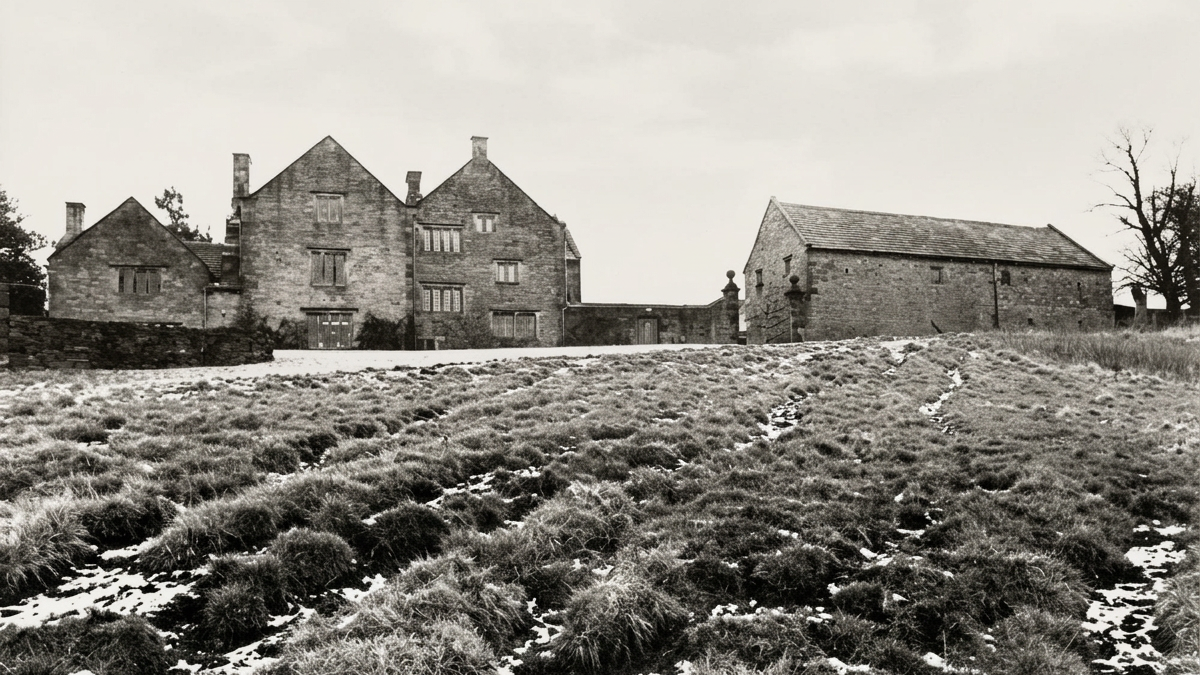
Nearly 1000 years in the making.
Our History
Nearly a thousand years in the making.
Barlow Woodseats Hall is the last remaining mansion house in the parish of Barlow, with a story stretching back almost a thousand years.
The manor can be traced to 1086 and Ascoit Mustard, with ownership passing through a succession of families and some of the great names of English history, including the Dukes of Portland and the Earls of Shrewsbury.
The Hall that stands here today carries those centuries with it — in its buildings, its landscape and the stories of the people who have called Barlow Woodseats home.

A House With a Story
The Hall has been home to its present owners since 2006 and has more recently been reunited with the historic Cruck Barn and outbuildings, which had been under separate ownership since the mid-1960s.
But the story of Barlow Woodseats goes back much further.
Bess of Hardwick
Barlow Woodseats Hall is believed to have been the first marital home of Elizabeth ‘Bess’ of Hardwick, one of the most remarkable women of Tudor England.
Bess married Robert Barlow while they were both still teenagers. Their marriage was short-lived, with Robert dying in 1544, but Bess went on to become one of the wealthiest and most influential women of Elizabethan England.
Through her later marriages she became connected with the Cavendish family and the Earls of Shrewsbury, and her extraordinary life would become closely associated with two of Derbyshire's great houses — Chatsworth and Hardwick Hall.
The Hall We See Today
There has been a house at Barlow Woodseats since at least 1269, while deeds from 1368 refer to Barley Woodsettes — meaning the house in the woods belonging to Barley.
The present Hall largely dates from 1624, when Arthur Mower, estate manager to the Earl of Shrewsbury, remodelled the house around the time of his marriage.
Evidence of the centuries can still be found throughout the building. Original timbers retain their carpenter's marks, alongside historic protective or 'witch marks', while scorched symbols in one of the plaster ceilings are thought to have been made to ward off evil spirits.
The Mower Family
Arthur Mower's surviving diary gives a fascinating glimpse into life here during the 17th century — recording everyday events, entertaining, work on the estate and life in the surrounding community.
Arthur died in 1652, but generations of the Mower family continued to occupy Barlow Woodseats.
Over the years, documents connected with the Hall have also found their way home, including historic wills and financial documents dating from the late 1600s and 1700s — one bearing the signature of George III.
The Thorolds & Barlow Today
In 1843, the Hall passed to the Thorold family through the marriage of Charlotte Mower. The Thorold family's own history can be traced back centuries, including connections to Lincolnshire during the reign of Edward the Confessor.
Remarkably, descendants of both the Mower and Thorold families have visited Barlow Woodseats in recent years, allowing the present owners to meet descendants connected with all six families who have lived here since 1624.
Today, the Hall, Cruck Barn and surrounding buildings are together once again — and another chapter in the story of Barlow Woodseats is being written.


War, Restoration & Reunion
In April 1941, Barlow Woodseats Hall was badly damaged during a German air raid.
A bomber believed to have been targeting Sheffield's steelworks released its bombs across the Millthorpe Valley. A landmine falling in the field beside the Hall caused an explosion that destroyed much of the eastern gable and damaged the roof.
The Hall was later comprehensively restored, and timbers inserted during those repairs can still be seen in the roof today.
A New Chapter
The estate remained with the Thorold family as a tenanted farm until 1964, when it was offered at public auction — thought to be the first time Barlow Woodseats had ever been sold on the open market.
By then, the Hall was considered unfit for habitation. It was purchased by Eric Furness before being sold to the Milward family, who undertook the considerable task of restoring it as their family home.
As part of this period of change, the Hall became separated from its barns and farmland, beginning a division that would last for around half a century.
The surrounding land continued as a working farm, first with dairy cattle and later moving into beef production. Farming remains an important part of the landscape around Barlow Woodseats today.
Reuniting the Hall & Barn
In 2007, Barlow Woodseats Hall was purchased by Nicholas Todd.
Then, in 2014, the historic barns were acquired separately, bringing the Hall and Cruck Barn back together after decades of separate ownership.
It was an important moment in the history of Barlow Woodseats — reconnecting two buildings whose stories had been intertwined for centuries.
The Cruck Barn
The five-bay Cruck Barn is one of the most important buildings at Barlow Woodseats.
Dating from around 1530, its great timber cruck frames survive more than 500 years after they were first raised. Evidence suggests the original building was thatched, with walls formed from timber boarding or wattle and daub.
When the Hall was remodelled in 1624, part of the barn was altered to create an impressive stable range, with basic accommodation for staff above.
Traces of the people who lived and worked here remain visible today. Historic plasterwork contains initials, writing and daisywheel markings, traditionally associated with protecting buildings from harm.
Even details such as the small cedar windows have been chosen to reflect the character of the originals.
A Glimpse of Barlow Before the War
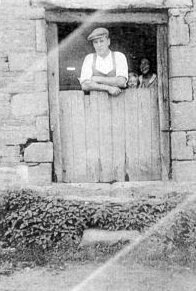
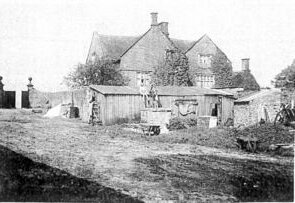
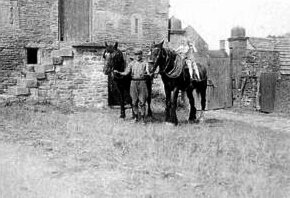
In 2013, Margaret Welch returned to Barlow Woodseats with her family.
She had stayed at the farm as a child before the Second World War and brought with her something rather special: photographs taken by her father during those visits.
At a time when everyday family photography was far less common, the pictures provide a remarkable glimpse of life at Barlow Woodseats before the war.
We’re very grateful to Margaret and her family for allowing these photographs to become part of the Hall’s story.



Barlow Woodseats Today
After years of careful restoration, Barlow Woodseats Hall has entered a new chapter.
Today, the historic Hall and Cruck Barn are once again at the heart of life here — hosting weddings, Sunday lunches, private gatherings and special events, with courtyard cottages and glamping allowing guests to stay a little longer.
The aim has always been to keep the character and history of Barlow Woodseats intact while giving these remarkable old buildings a purpose for the future.
The Peacocks
And then there are the peacocks.
They’ve become very much part of life at Barlow Woodseats, roaming freely around the Hall, courtyard and grounds throughout the year.
A group of peacocks is rather wonderfully called an ostentation, and ours have included some appropriately named residents — Bess and Hardwick among them.
In spring and summer, the males display their extraordinary tail feathers, while chicks can sometimes be spotted exploring the grounds with their mothers.
They are inquisitive, noisy, occasionally destructive and entirely convinced that Barlow Woodseats belongs to them.
We’re inclined to agree.
Nearly a Thousand Years — and Counting
From medieval manor to Jacobean home, working farm and the Barlow Woodseats Hall you see today, this place has never stood still.
Its buildings carry the marks of the people who came before us, and we're fortunate to be looking after them for the next generation.
We hope you’ll come and experience a little of its story for yourself.